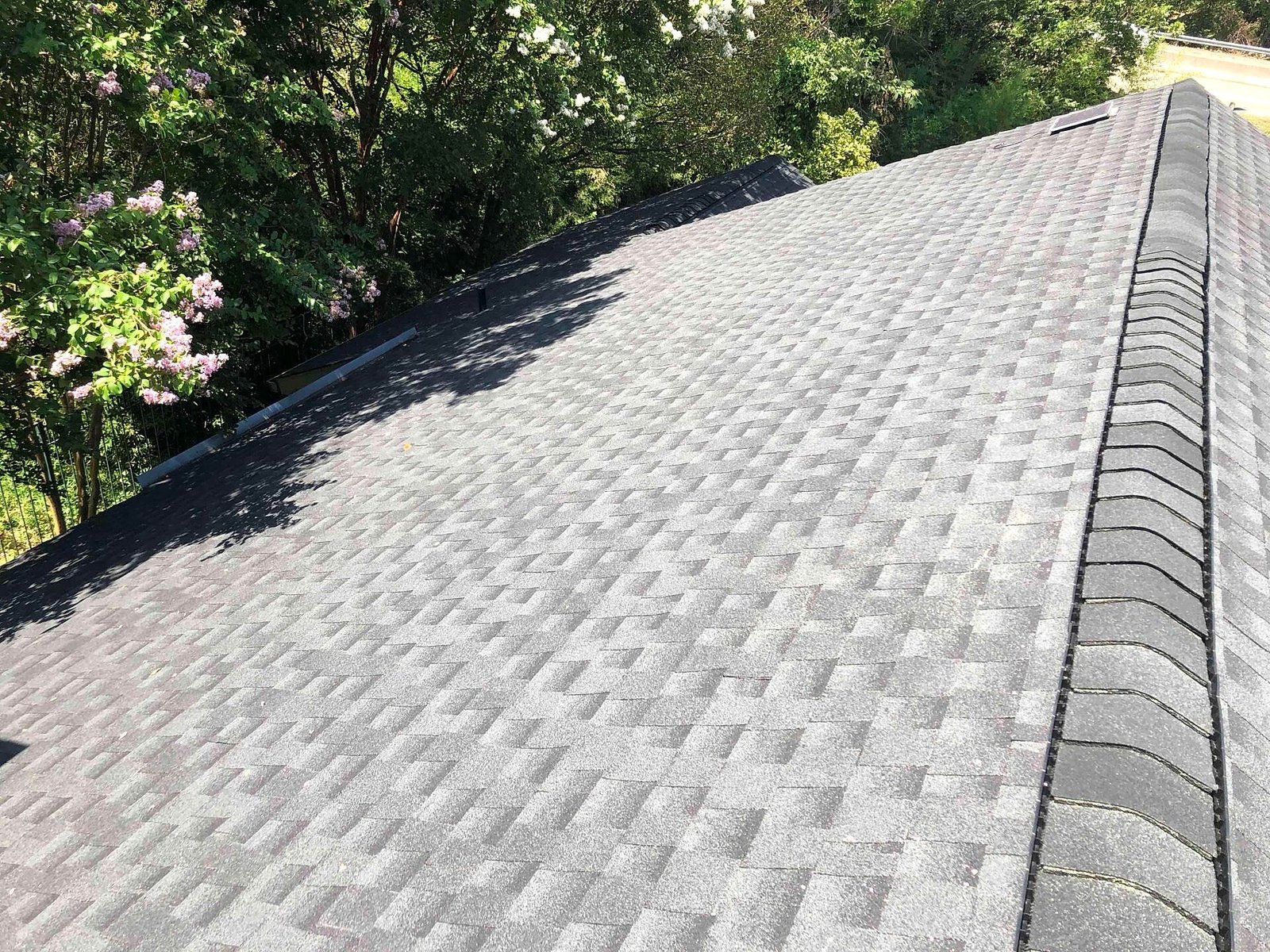
After hail · Dallas–Fort Worth
You do not need to assume that every hailstorm means a full roof replacement, but you also should not ignore signs of damage. The practical approach is to document the condition, stop active water intrusion, get a roof-specific inspection and decide whether repair, replacement or monitoring is appropriate.
Do not wait on an active leak
If water is entering the home, protect the property from additional damage. Temporary tarping or other emergency protection may be appropriate. Photograph the condition first when it is safe to do so and keep receipts for temporary work.
A roof can look fine from the ground and still need inspection
Hail and wind damage can affect shingles, ridge caps, flashing, vents, gutters and other roof components. An inspection should distinguish functional damage from normal aging and should document whether the issue is isolated or widespread.
Your neighbor’s roof does not determine yours
Storm intensity can vary over short distances, and roof materials, age, orientation and prior condition differ from house to house. A replacement next door does not prove your roof needs replacement, and an undamaged neighboring roof does not prove yours is fine.
Repair may be the right answer
Localized damage can often be repaired. Replacement becomes a construction question when damage is widespread, repairs cannot reliably restore the system, or the roof’s overall condition makes repeated repairs impractical. Start with the roof condition, not the desired outcome.
If insurance may be involved
Document the damage and review your policy’s wind and hail coverage, deductible and roof settlement terms. Your insurance company determines coverage and claim payment. Roofing Giant can provide the roofing inspection, photographs and construction estimate, but we do not act as a public insurance adjuster or negotiate policy coverage.
Texas consumer resource: Hail and wind damage: what to do next.